


History of Illinois-Kentucky Fluorspar District
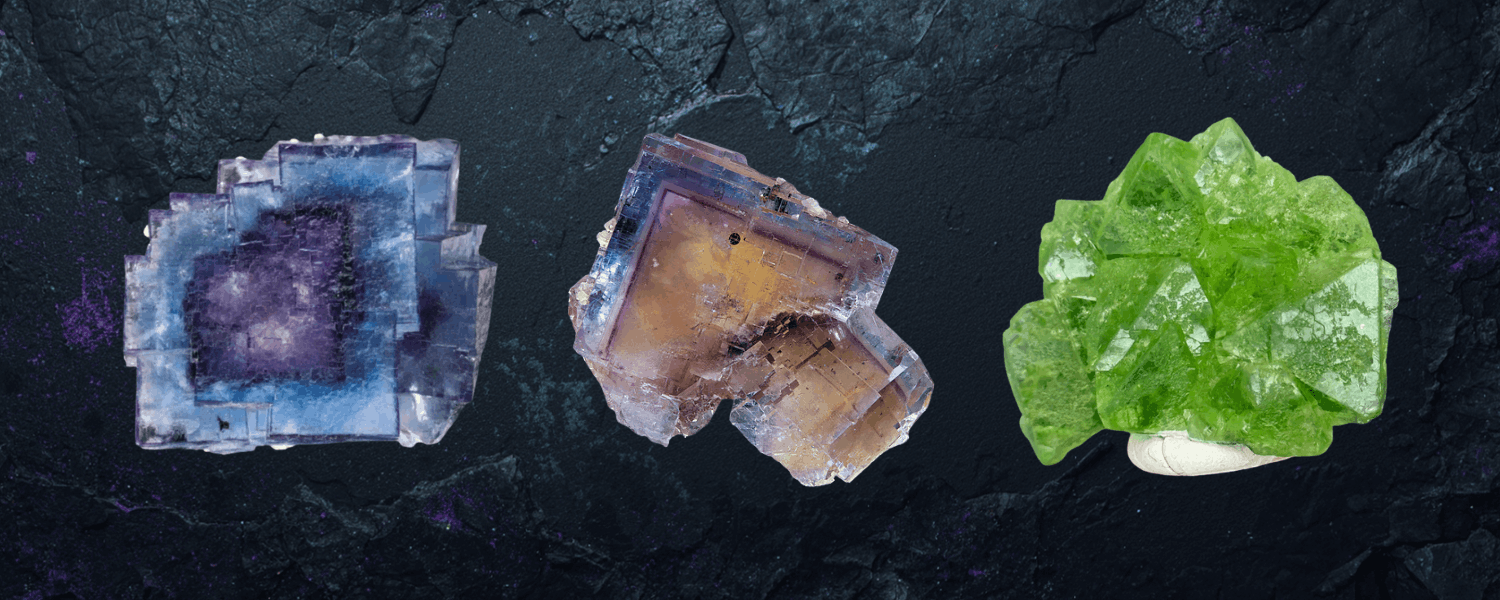
A Legacy from the Earth: The Story of the Kentucky Fluorspar District
Our history is rooted deep within the hills of Western Kentucky. For over 150 years, the mines of the Illinois-Kentucky Fluorspar District—with their heart in Crittenden and Livingston counties—were the most important source of fluorspar in the nation. This is the story of the mineral that built American industry, the community that unearthed it, and the enduring legacy it leaves behind.

The Early Days: An Accidental Discovery (c. 1835 – 1890)
Long before its industrial value was understood, fluorspar was simply a beautiful, colorful rock encountered by early settlers mining for lead. First identified in the 1830s near the Crittenden County Courthouse, the mineral, known locally as “spar,” was often discarded as waste. These early miners, seeking galena (lead ore), had unknowingly uncovered the world’s richest fluorspar deposits, a resource whose time had not yet come but whose discovery laid the groundwork for a future industrial boom.
The Steel Boom: Fueling an Industrial Revolution (c. 1890 – 1914)
The dawn of the 20th century transformed fluorspar from a geological curiosity into a critical industrial commodity. The development of open-hearth steel manufacturing created massive demand for fluorspar as a flux, a substance that makes the smelting process more efficient by removing impurities like sulfur and phosphorus. The Kentucky district boomed as dozens of mines opened, rail lines were extended to transport the ore, and the towns of Marion and Salem became the bustling centers of a new and vital American industry.
The World at War: A Strategic National Asset (c. 1914 – 1945)
Twice in the 20th century, the Kentucky Fluorspar District was called upon to secure victory. During both World Wars, its importance skyrocketed. Fluorspar was essential for manufacturing the vast quantities of steel needed for ships and armaments. Furthermore, its derivative, hydrofluoric acid, was a critical component in producing high-octane aviation fuel and, most secretly and significantly, in enriching the uranium used for the Manhattan Project. The U.S. government deemed the district’s output a strategic necessity, funding exploration and pushing mines to their maximum capacity to support the war effort.
The Golden Age: Peak Production and Global Dominance (c. 1945 – 1970s)
In the post-war era, the district entered its golden age, becoming the undisputed global leader in fluorspar production. Technological advancements made mining safer and more efficient, allowing access to deeper and richer ore veins. Generations of families built their lives around the mines, creating a unique and resilient community culture. The vibrant, multi-colored fluorite crystals extracted during this period also became world-famous, sought after by museums and collectors for their unparalleled beauty and perfection, making the district as famous for its gems as for its industrial output.
The End of an Era, An Enduring Legacy (c. 1980s – 1995)
After a century of dominance, the Kentucky fluorspar industry faced insurmountable challenges. The depletion of high-grade, easily accessible ore reserves made operations more costly. Simultaneously, the rise of inexpensive fluorspar imports from countries like Mexico, South Africa, and later China, flooded the market. Unable to compete, the last major commercial fluorspar mine in the district, operated by Ozark-Mahoning, ceased operations in the mid-1990s, bringing an end to the era of large-scale mining that had defined the region’s economy and identity.
Though commercial mining has ceased, the district’s legacy is indelible. It lives on in the local communities, in the environmental reclamation efforts, and in the scientific knowledge gained from studying its unique geology. Today, the district is revered as a world-class mineral locality. The stunning fluorite specimens housed in the Clement Mineral Museum and in collections worldwide are a testament to the natural treasure that lies beneath the hills of Kentucky, a permanent reminder of the industry and people who helped build the modern world.

A New Beginning: Securing America’s Future (2025 – )
A new chapter for American fluorspar is beginning. In a world of shifting geopolitical landscapes and fragile global supply chains, the United States has re-prioritized the domestic sourcing of critical minerals—and fluorspar is essential. Its role in producing semiconductors, electric vehicle batteries, solar panels, pharmaceuticals and nuclear power through uranium enrichment makes it indispensable to a modern, secure economy.
Critically, China, once the world’s dominant fluorspar exporter, has become a net importer, fundamentally reshaping the global market. This creates a once-in-a-generation opportunity to restart production on American soil, leveraging modern, environmentally responsible mining and processing technologies to meet new demand and secure a vital resource for generations to come.
Historic Production of IKFD
The Illinois–Kentucky Fluorspar District became the heart of the U.S. fluorspar industry and remains one of the most significant fluorspar mining regions in the world. During the twentieth century, Kentucky fluorspar mining and neighboring Illinois operations supplied essential fluorite for steel production, aluminum manufacturing, and the chemical industry. Historical production records show that the Illinois portion of the district produced approximately 12.5 million tons of fluorite, while Kentucky mines contributed an estimated 20 million tons, bringing total production across the Illinois–Kentucky Fluorspar District to roughly 32.5 million tons. This remarkable output underscores the region’s central role in American fluorspar mining history and highlights why western Kentucky became synonymous with large-scale fluorite production for decades.
Fluorite- Eureka Mine, Marion, KY Crystals to 7.5mm Peter Cristofono Specimen and Photo
Calcite and Fluorite specimens like this were mined right here in Kentucky-Illinois Fluorspar District
Galena on Fluorite, Denton Mine, Harris Creek Mining Sub-District, Hardin County, Illinois, USA
Fluorite specimen from IKFD, USA